ESTADIO AZTECA GUIDE: NAVIGATING THE 2026 WORLD CUP CATHEDRAL
Heading to the Azteca for the 2026 World Cup Opener? Master the light rail, beat the altitude, and discover the secrets of football's most historic cathedral.
HOST CITIESSTADIUM MAPSLOGISTICS
KICKOFF USA 2026
3/16/20265 min read
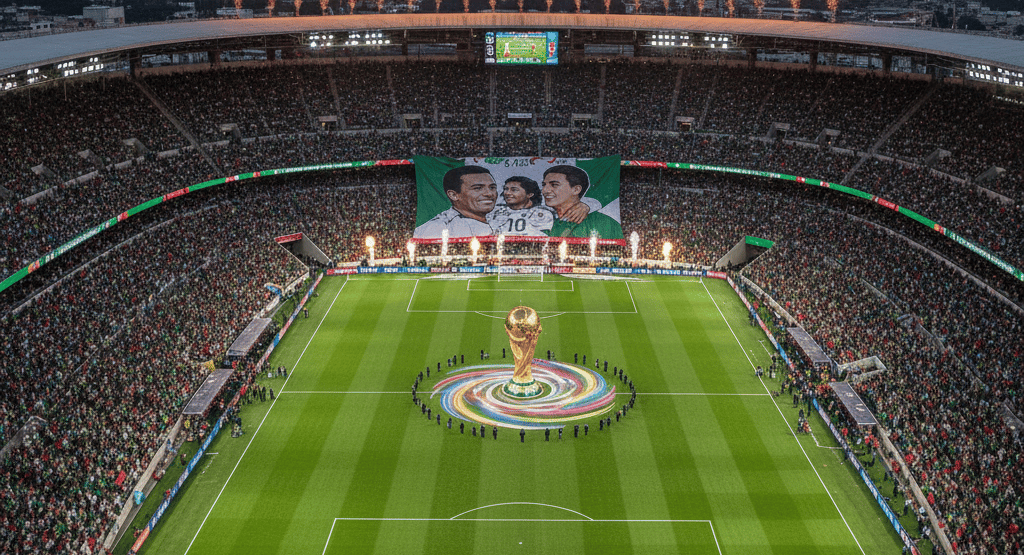
Estadio Azteca: The Cathedral of Football’s Immortal Legacy
There is no venue on Earth like the Estadio Azteca.
To call it a "stadium" feels like a trivialization, a linguistic failure to capture the weight of the history etched into its concrete soul. Rising from the volcanic soil of Mexico City’s southern suburbs, the "Colossus of Santa Úrsula" is more than a sporting arena; it is the Vatican of world football. When the 2026 World Cup kicks off here on June 11, it will not just be another tournament opener. It will be the third time the Azteca has raised the curtain on the greatest show on Earth, a record that no other stadium in the world, not Wembley, not the Maracanã, not the Santiago Bernabéu, can even dream of touching.
For the traveler, the Azteca is a destination that demands respect. It is a place where legends are minted, where myths are born, and where 87,000 voices can turn air into solid, vibrating sound. If you are planning to make the pilgrimage to this temple, you are not just attending a match; you are walking into the heart of global sporting history.
A History Written in Gold
To understand the Azteca, you must understand the weight of the ghosts that inhabit it. Opened in 1966, the stadium was designed by Pedro Ramírez Vázquez to be a feat of architectural audacity. Its massive, sweeping canopy was engineered to protect fans from the intense Mexican sun, but it ended up doing something more important: it trapped the sound.
This is the stadium where Pelé was carried aloft in 1970, confirming his status as the King of Football. This is the stage where Diego Maradona, in the span of just four minutes in 1986, scored both the most infamous and the most brilliant goals in the history of the sport, the "Hand of God" and the "Goal of the Century."
When you sit in these stands, you aren’t just looking at a pitch. You are looking at the exact coordinates where the two greatest players to ever lace up boots touched the pinnacle of human achievement.
The 2026 Transformation: A Modern Colossus
For the 2026 World Cup, the Azteca has undergone a radical, $150-million-plus modernization. The challenge for the architects was clear: how do you upgrade a historic temple without destroying its spirit?
The result is a hybrid of the old and the new. Crews have replaced all 87,000+ seats, installed cutting-edge LED lighting, and implemented a brand-new high-fidelity sound system featuring 250 speakers, ensuring that when the Mexican crowd begins to chant, the sound doesn't just roar; it vibrates in your chest. The pitch itself is a new hybrid-grass installation designed to withstand Mexico City’s notorious summer downpours. It is faster, brighter, and more technologically advanced than ever, yet it retains that steep, intimidating bowl design that makes you feel as though you are leaning directly over the action.
🗺️ Navigating the Cathedral: The Logistics Guide
Mexico City is a megacity of over 20 million people. On match day, the city is a living, breathing creature. Navigating it to reach the Azteca requires the precision of a tactical strike.
1. The "Tren Ligero" Route: The Golden Path
If you are coming from central areas like Roma or Condesa, do not attempt to drive. The traffic around Calzada de Tlalpan on match day is legendary, and not in a good way.
The most efficient route is the public transit combination:
Metro Line 2 (Blue Line): Take this south to the Tasqueña station.
Tren Ligero (Light Rail): Transfer here to the Xochimilco Light Rail. There is a station explicitly named Estadio Azteca, located directly in front of the stadium.
The city has bolstered this route with 17 brand-new trains specifically for the World Cup. It is the cheapest, fastest, and most authentic way to arrive. You will find yourself shoulder-to-shoulder with thousands of passionate El Tri supporters, and by the time the train pulls into the stadium station, the adrenaline will be infectious.
2. The Uber/Didi Strategy
If you insist on a private vehicle, set your destination to a drop-off point at least 2km away from the stadium perimeter. The roads directly surrounding the Azteca will be cordoned off for official FIFA traffic and security sweeps. By dropping off a 20-minute walk away, you avoid being trapped in the "bottleneck" of thousands of cars attempting to navigate the stadium’s narrow access roads.
3. Security & The "Clear Bag" Protocol
FIFA security is not localized club-match security. Expect multiple concentric rings of screening.
The Perimeter: Be prepared for an outer-ring ticket check before you even reach the stadium plaza. Have your digital ticket ready on your phone, do not wait for a signal. Take a screenshot of your QR code to ensure offline access.
Prohibited Items: Follow the FIFA "Clear Bag" policy to the letter. Do not bring umbrellas (they are forbidden), and leave your professional camera gear at the hotel. If you have it, they will take it, and there is no "check room" for you to retrieve it later.
The Atmosphere: Why You Must Arrive Early
The Azteca is one of the highest stadiums in the tournament, sitting at 2,200 meters (7,200 feet) above sea level. This is "Thin Air Territory." If you are not used to the altitude, your lungs will feel it, especially if you get caught in the rush of a last-minute arrival.
Arrival Strategy: Plan to be at the stadium gates at least three hours before kickoff.
The energy outside the Azteca on match day is a cultural experience in itself. The air will be thick with the smell of street tacos, roasted corn (elotes), and the sound of hundreds of different fan chants. Use this time to explore the stadium plaza, find your gate, and soak in the pre-match madness. When you walk through the tunnel and see the bowl open up for the first time, you want to be calm, hydrated, and ready to scream until your lungs burn.
The Dossier Intel: Insider Secrets for the Azteca
The Sun Factor: If you have an afternoon match, the sun can be brutal. Even with the new canopy, the sun hits the lower tiers in the afternoon. Pack a hat and sunglasses, even if it looks cloudy.
The "Stay-Back" Move: When the match ends, do not immediately join the migration to the Tren Ligero station. It will be a crush. Instead, stay in your seat, share a beer with the fans around you, and wait 30 minutes for the initial wave of humanity to move. You will get home faster by waiting than by fighting.
The Altitude: Drink double the water you think you need. The combination of altitude and excitement is a recipe for quick dehydration.
Final Verdict: A Pilgrimage
Visiting the Estadio Azteca for the 2026 World Cup is a check-the-box moment for any human being who loves the game. It is a stadium that has seen more joy, more agony, and more historic brilliance than any other.
You are going to the place where history lives. Bring your voice, bring your patience, and prepare to be changed by the experience. This is the Azteca.