TRAVEL ALERT: SOUTH ASIA AIRSPACE CLOSURES AFTER "OPEN WAR" DECLARATION
A new conflict between Pakistan and Afghanistan has triggered major flight reroutes. Fans traveling from Asia or the Middle East should check carrier updates immediately.
BREAKING NEWS
KICKOFF USA 2026
2/28/20262 min read
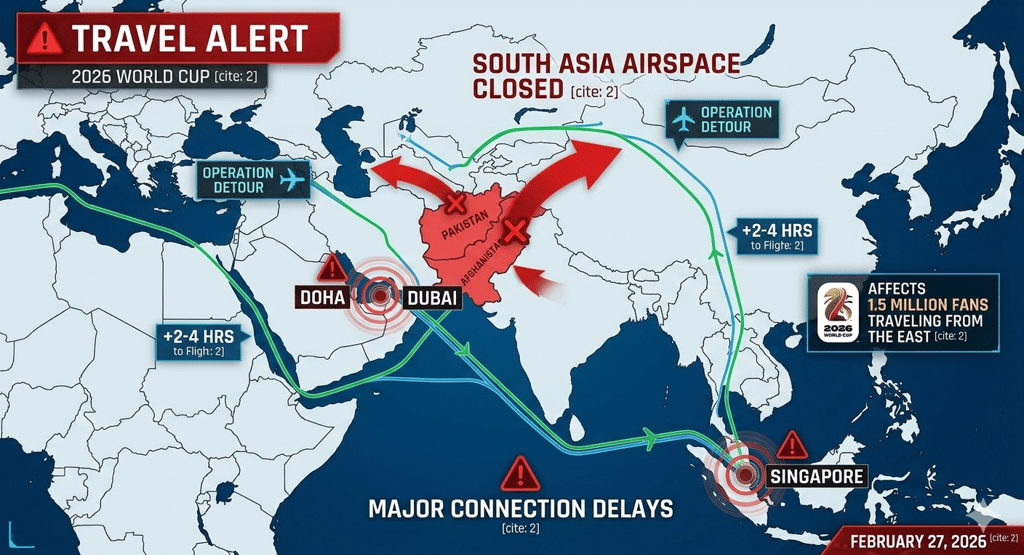
ISLAMABAD/KABUL — A major escalation in the conflict between Pakistan and Afghanistan has triggered a "red alert" for international travelers planning their routes to North America for the 2026 World Cup.
Following a series of overnight airstrikes on Kabul and Kandahar, Pakistan’s Defense Minister Khawaja Asif officially declared a state of "open war" today, leading to immediate and severe restrictions on the region’s busiest flight corridors.
Airspace Under Lockdown
As of 5:00 AM local time, Pakistan has closed several key air sectors to commercial traffic, particularly those used by carriers flying from India, Southeast Asia, and Australia toward the West.
Reroutes in Effect: Major airlines, including Qatar Airways, Emirates, and Singapore Airlines, have begun "Operation Detour," bypassing Pakistani and Afghan airspace.
The Cost of Safety: Travelers should expect flight times to increase by 2 to 4 hours as planes are forced to fly south over the Arabian Sea or north through Central Asian corridors.
Price Hikes: Analysts warn that if these closures persist into the summer, the increased fuel costs for "long-way" routes could lead to a 15–20% surcharge on last-minute World Cup tickets.
Impact on World Cup Fans
With an estimated 1.5 million fans expected to travel from the Asian and Middle Eastern markets, this conflict is creating a "logistics bottleneck" just 104 days before kickoff.
"We are advising all fans traveling from the East to monitor their carrier apps hourly," says travel analyst Marcus Thorne. "This isn't just a delay; it's a total reconfiguration of the global flight map. If you have a tight connection in Doha or Dubai, you are now at high risk of missing your second leg."
A Silver Lining in Geneva?
While South Asia is in turmoil, there is a glimmer of hope for Middle Eastern travel. Indirect nuclear talks between the United States and Iran concluded in Geneva yesterday with Omani mediators reporting "significant progress." If a deal is reached next week in Vienna, it could lead to a de-escalation of U.S. military presence in the Persian Gulf, potentially stabilizing flight paths through Iranian airspace.
What You Should Do Now:
Check Your "Legs": If your flight to the US or Mexico has a layover in the Middle East, confirm your new departure time immediately.
Purchase Travel Insurance: Ensure your policy covers "Acts of War" and "Airspace Closure," as standard "trip interruption" may not apply.
The 4-Hour Rule: If your rerouted flight now lands less than 4 hours before your next match, consider rebooking to arrive a day earlier.