WORLD CUP 2026 TRANSIT FUNDING: DOT ANNOUNCES $100M "TRANSIT BLITZ" FOR U.S. HOST CITIES
Breaking News: The U.S. Department of Transportation has authorized $100.3 million in emergency funding for 2026 FIFA World Cup infrastructure. Learn about the "SoccerBus" initiative, 24/7 rail service, and why New York, Dallas, and LA are receiving the largest allotments.
BREAKING NEWS
KICKOFF USA 2026
3/15/20264 min read
🚨 BREAKING NEWS: The $100 Million "Transit Blitz" - Feds Unlock Emergency Funding to Save World Cup Mobility
WASHINGTON, D.C. — In a decisive move to prevent a "transportation meltdown" during the largest sporting event in human history, the U.S. Department of Transportation (DOT) has officially authorized an emergency $100.3 million "Transit Blitz" investment. The funding, announced this morning by federal officials, is specifically earmarked to overhaul the aging transit infrastructure of the 11 U.S. host cities just 88 days before the 2026 FIFA World Cup kicks off.
With over 6 million fans expected to descend upon North America, the "Transit Blitz" represents a last-minute federal insurance policy against the gridlock that has long been the Achilles' heel of American host cities like Los Angeles, Dallas, and New York.
The Capital Breakdown: Who Gets the Lion’s Share?
The federal government’s allocation strategy reveals where officials believe the highest risk of "logistic failure" exists. The funding is not distributed equally; instead, it targets high-density corridors and stadiums with historically difficult "last-mile" access.
Top 3 Federal Allotments:
New York/New Jersey ($10.4 Million): To the surprise of a few, the region hosting the World Cup Final received the largest cut. The funds are designated for the MetLife Stadium-Secaucus Junction corridor, aimed at increasing rail frequency to a train every 4 minutes on match days.
Dallas/Arlington ($10.0 Million): Known for its heavy reliance on cars, Dallas is receiving a massive boost to establish the "SoccerBus" network, a dedicated fleet of high-speed shuttles connecting downtown Dallas and Fort Worth directly to AT&T Stadium.
Los Angeles ($9.6 Million): The funds will fast-track the "K-Line" extension and bolster LA Metro’s security presence, ensuring that the trek to SoFi Stadium is shielded from the city’s legendary freeway congestion.
The "Upgrades" Era: Contactless, 24/7, and Seamless
This $100 million injection isn't just for fixing potholes; it’s for a digital and mechanical revolution in how fans move. The DOT has mandated that host cities implement three specific pillars of infrastructure to receive the funds:
I. "Better Breeze" Contactless Payments
Gone are the days of fumbling with paper tickets or city-specific plastic cards. The "Better Breeze" initiative ensures that every host city, from Atlanta to Seattle, accepts universal contactless payments (Apple Pay, Google Pay, and contactless credit cards) at every turnstile. This is expected to reduce station dwell times by 45%.
II. The "SoccerBus" Shuttles
Recognizing that many U.S. stadiums are not directly served by rail (most notably in Dallas and Miami), the federal government is funding a "tactical bus fleet." These "SoccerBuses" will operate in dedicated, police-escorted lanes, bypassing standard traffic to move 50,000+ fans in a three-hour window.
III. 24/7 Match-Day Rail
For the duration of the tournament, the "Transit Blitz" subsidizes the operational costs of running rail services 24 hours a day on match days. This ensures that fans attending late-night matches or post-game celebrations in "Fan Festivals" are never stranded.
City Spotlight: Atlanta’s "Green & Gold" Victory
While New York took the most cash, Atlanta is being hailed as the "Model Host" this weekend. City leaders, transit officials, and FIFA delegates gathered at Mercedes-Benz Stadium to unveil the revamped Centennial Olympic Park.
The park has undergone a multi-million dollar transformation to serve as the primary, free FIFA Fan Festival. Key upgrades include:
The "SEC District" Link: A newly beautified pedestrian corridor connecting the Five Points MARTA station directly to the Fan Festival and the Stadium.
The "Digital Canopy": High-speed 6G Wi-Fi throughout the park, allowing fans to stream other matches while attending the festival.
Zero-Emission Focus: Atlanta will deploy the nation’s largest fleet of electric "Last-Mile" shuttles to ferry fans from MARTA stations to the park’s perimeter.
"Atlanta isn't just preparing for a soccer tournament; we are building a 21st-century mobility footprint that will last decades after the trophy is raised," said an Atlanta city spokesperson during the unveiling.
The "Last-Mile" Crisis: Why This Funding Matters
Transportation experts have warned for years that the U.S. was ill-prepared for the sheer volume of a 48-team World Cup. Unlike Qatar (a single city) or Germany (high-speed rail), the 2026 tournament spans a continent.
The $100.3 million is a "surgical strike" against the "Last-Mile" problem, the difficult journey between a train station and the stadium gates. In cities like Foxborough (Boston) and Santa Clara (San Francisco), this gap has historically caused four-hour delays. The federal "Transit Blitz" is designed to shrink that gap to under 30 minutes through high-frequency shuttles and enhanced wayfinding.
Tactical Survival Guide for Fans
If you are planning to attend matches in the U.S. host cities, the "Transit Blitz" changes your strategy. Here is the field intel:
Ditch the Rental Car: With "SoccerBus" lanes and 24/7 rail, driving to a World Cup stadium will be a logistical nightmare. Parking rates are expected to exceed $450 per match in New York and LA.
Download the "FIFA Move" App: This upcoming app (funded in part by the DOT) will integrate all 11 city transit systems into one real-time map.
The "Better Breeze" Advantage: Ensure your digital wallet is set up before you land. You will not need to buy local transit cards.
The Bottom Line
The $100 million "Transit Blitz" is a high-stakes gamble by the federal government. It is an admission that our current systems aren't enough, but also a promise that for 30 days in 2026, the U.S. will operate with the transit efficiency of Tokyo or London.
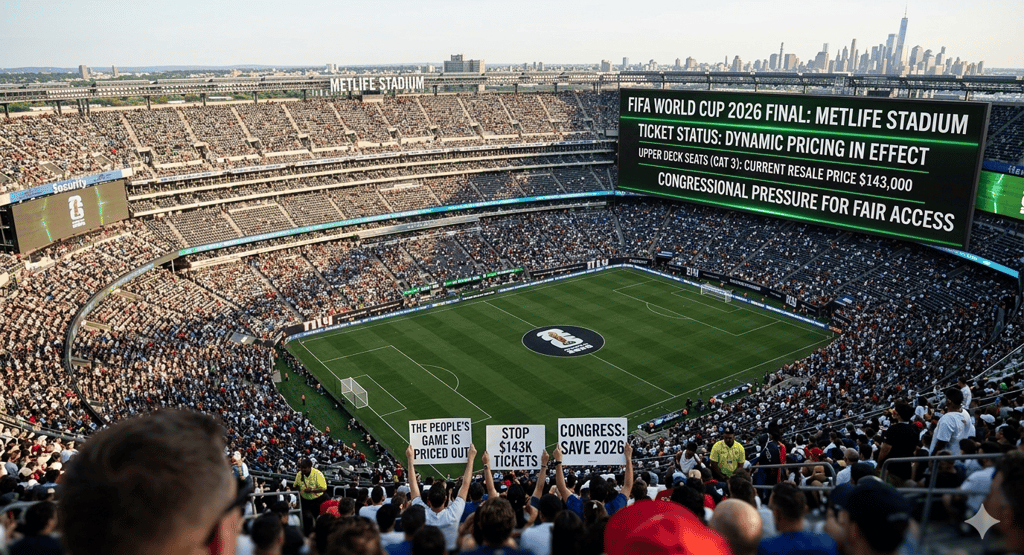
As the "Wealth Wall" of ticket prices continues to climb, these transit upgrades represent the only "accessible" part of the World Cup experience for the millions of fans who will be watching from the streets and Fan Festivals.
Take Action: Demand Fair Access
As transit becomes more accessible, we must ensure ticket prices follow suit.